Well, DUH!!! You say? Not fast. Let's look at a few examples.
1st, "Dewey WINS!!!"
(Image from Chicago Tribune)
We all know the famous gaff of the Chicago Tribune. Simple statistics error and an eager editor to scoop the competition lead to one of the most famous political headlines of all time.
Lesson Learned: Understand the foundation of the numbers and their meaning, Understand what is needed to be collected to obtain proper results.
2nd, Kansas City Hyatt Regency walkway collapse
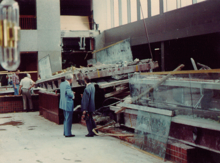

(Images from Wikipedia)
This is one of the most infamous engineering disasters in history. The cause of the issue was the variation of the design from the engineer's intent.

(Image from Wikipedia)
Don't worry, I am not going into the loading diagram so relax, this isn't an engineering lecture. What I do want you to notice is how simple the design change was. The contractor made that change without the engineers approval. He did it without knowing anything about loads etc. The contractor wasn't the only one at fault either. The engineer made a mistake in thinking the contractor had the ability to manufacture a 4 story tall threaded rod. (Trust me, that is very long and very expensive to make, if it was possible at the time.)
Lesson Learned: Don't change things without a complete understanding of all the facts, especially if that data is available to you (Contractor should have made a call to the design engineer and ask about the change.) Also do not accept your own ideas without some review from a qualified source, (the engineer should have contacted a contractor or manufacturer about maximum available rod lengths for his project.)
3rd, HR employee retention demographics.
Here is where we check to see if everyone has been paying attention. A manufacturing company needs to keep it's top talent, but due to other issues it can't compete in a normal way. (Salary, benefits, perks, etc.) The HR department does a study and shows a single digit turn over rate for the entire company. HR smiles and thinks only minor changes are needed to maintain their current staff. HR does a report and presents it to management. Professional staff roll over continues, and even accelerates. Why?
HR lumped professional degree employees in with hourly line workers, (note: The HR department does a study and shows a single digit turn over rate for the ENTIRE company.) HR could have looked at who was leaving the company, conducted exit interviews with the leaving employee or colleges. Actually focused on the people leaving. The first clue is when you have Professionals leaving (engineers, accountants, management,) you gut a company. The people who put your product to market you need to keep. We all know you loose enough of your professional staff, you loose the core of your company.
Lessons Learned: All 4 from above.
These issues affect companies every day. Not getting to the core of the issue and understanding what the numbers are telling us. Be sure your performance metrics can be used to answer the questions you need answered. If not you will continue to loose as in the examples here.
How much of your company have you lost?

